
You have given notice. The boxes are stacked by the front door. The removalists are booked. And then it hits you: the final inspection is in four days and the oven still has last Tuesday’s dinner baked onto the glass.
This is where most Victorian renters either panic-clean for 48 hours straight or quietly accept they will lose a portion of their bond. Neither is necessary. What you actually need is a proper end of lease cleaning checklist, one built around what Melbourne property managers check at final inspection, not a generic list pulled from a national template.
According to the RTBA Annual Report 2023-24, published by Consumer Affairs Victoria, 36% of Victorian renters lost part or all of their bond at lease end. Cleaning disputes drive a significant portion of those losses, and the areas that trip people up are the same ones, in the same order, year after year.
This checklist covers every room, every surface and every detail that matters for a Victorian rental inspection.
Before you start: what Victorian agents actually check at final inspection
A property manager does not walk through your home with a general impression of “clean enough.” They walk through with the condition report from move-in day, and they compare every room, surface and fitting against that baseline.
The standard they apply is “reasonably clean, allowing for fair wear and tear” under the Residential Tenancies Act 1997 (Vic). In practice, that means:
- The property should match or exceed the condition noted on the ingoing report
- Fair wear and tear (scuff marks on walls from normal furniture placement, minor carpet wear in high-traffic areas) is accepted
- Dirt, grime, grease, mould and neglect are not wear and tear
The areas that trigger the most bond deductions, consistently, are oven interiors, rangehood filters, shower grout, window tracks and carpet edges. If you clean nothing else to a professional standard, clean those.
Kitchen: oven, rangehood, inside every drawer and the sink trap
The kitchen is where most inspections start and where most deductions are decided. Work from top to bottom:
- Rangehood and filters. Remove the filters and soak them in hot water with degreaser. Wipe the hood exterior and the underside. Grease buildup here is one of the most common agent complaints.
- Oven interior, racks, glass and door seal. Use a commercial oven cleaner (spray, close, leave overnight). Remove the racks and scrub separately. Clean between the glass panels if your oven door allows it. Check the rubber door seal for baked-on food.
- Stovetop and splashback. Degrease the cooktop, clean around the burners and wipe the splashback tiles or panel. Remove any discolouration around knobs.
- Sink and sink trap. Scrub the sink basin, clean the drain trap and remove any food buildup. Polish the tapware.
- Benchtops and drawers. Wipe all benchtops. Pull out every drawer and wipe the inside, the runners and underneath. Remove crumbs and residue from cutlery trays.
- Cupboard interiors. Open every cupboard. Wipe shelves, remove shelf liner if you added any, and check for spills on the base of each cabinet.
- Dishwasher interior and filter. Run an empty hot cycle with dishwasher cleaner. Clean the filter and the door edges.
- Fridge space. If the fridge is staying, clean inside and behind it. If it is yours, clean the floor and wall where it sat.
Bathrooms: grout, shower screens, exhaust fans and the silicone check
Bathrooms are the second most common inspection fail point.
- Shower screen. Remove soap scum with a bathroom-specific product. If the glass has hard water marks, use a paste of bicarb soda and white vinegar, then squeegee.
- Grout lines. Spray grout cleaner along tile joints, leave for 10 minutes, then scrub with a stiff brush. Mouldy grout is an instant red flag for agents.
- Silicone seals. Check the silicone around the shower base, bath and vanity. If it is black with mould that will not clean off, this is a known inspection issue. You are generally not expected to replace silicone, but you are expected to have kept it clean.
- Exhaust fan. Remove the cover, soak it and wipe the fan blades. Dust buildup on exhaust fans is one of those details agents notice.
- Toilet. Clean inside the bowl (including under the rim), the seat, the cistern exterior and the base where it meets the floor.
- Vanity, mirror and tapware. Wipe the vanity top and inside the cabinet. Clean the mirror streak-free. Polish taps and remove any limescale.
- Tiles, floor and drain. Mop the floor tiles. Remove hair and residue from the floor drain.
Bedrooms and living: skirting, light fittings, built-in wardrobes and cobwebs
These rooms are less labour-intensive but full of small details that add up.
- Built-in wardrobes. Open every door and drawer. Wipe shelves, hanging rails and tracks. Vacuum the wardrobe floor.
- Skirting boards. Wipe along the top edge and the face of every skirting board. Use a damp cloth, not a dry one (dust just moves).
- Light fittings and switches. Wipe light switches and power points. Remove and wash pendant shades or clean ceiling light covers in place.
- Ceiling and corners. Check for cobwebs in every corner, above curtain rods and behind doors.
- Walls. Remove marks, scuffs and adhesive residue. A melamine sponge works well on painted walls, but test in an inconspicuous spot first.
- Curtains, blinds and tracks. Dust blinds. If curtains are provided by the landlord, check the lease for washing requirements. Wipe curtain tracks.
Windows, tracks and screens: the inspection favourite nobody expects
Window tracks are the single most underestimated item on any bond cleaning checklist. Agents check them almost every time.
- Window glass. Clean inside and outside (where accessible). Streak-free is the standard.
- Window tracks and frames. Vacuum out the tracks, then wipe with a damp cloth. Use a toothbrush or cotton bud for the corners. Dirt and dead insects in window tracks is a classic fail.
- Fly screens. Remove and wash with soapy water. Let them dry before replacing.
- Window sills. Wipe down and check for mould, especially in bathrooms.
Floors and carpet: vacuum, mop and the steam clean question
- Hard floors. Vacuum first, then mop. Move furniture (if any remains) and clean underneath. Pay attention to edges and corners where dust collects.
- Carpet. Vacuum thoroughly, including along edges and under any remaining furniture. Check the lease for a carpet steam cleaning clause. Many Victorian leases require professional carpet steam cleaning at lease end, and agents will ask for the receipt.
- Carpet stains. Spot-treat visible stains before the steam clean. If you have a pet stain or odour issue, our blog on how steam cleaning removes pet stains and odours covers what works and what does not.
If you need the carpets professionally steam cleaned, get a free quote from Pro Clean Melbourne.
The utility checklist: keys, bin day and the final meter read
This is the non-cleaning list that still affects your bond.
- Keys. Return all keys, remotes, garage openers and security fobs. Missing keys can result in a lock-change deduction.
- Final meter read. Contact your electricity, gas and water providers to arrange a final read on your move-out date.
- Bin day. Put the bins out for the last collection. Leave them clean and in their designated spot.
- Mail redirection. Set up mail redirection through Australia Post.
- Light globes. Replace any blown globes. Check every fitting.
- Smoke alarms. These are the landlord’s responsibility, but flag any that are not working.
- Condition report. Complete the outgoing condition report. Take photos of every room and every surface as evidence of the clean. Timestamp them.
Your 3-day countdown plan
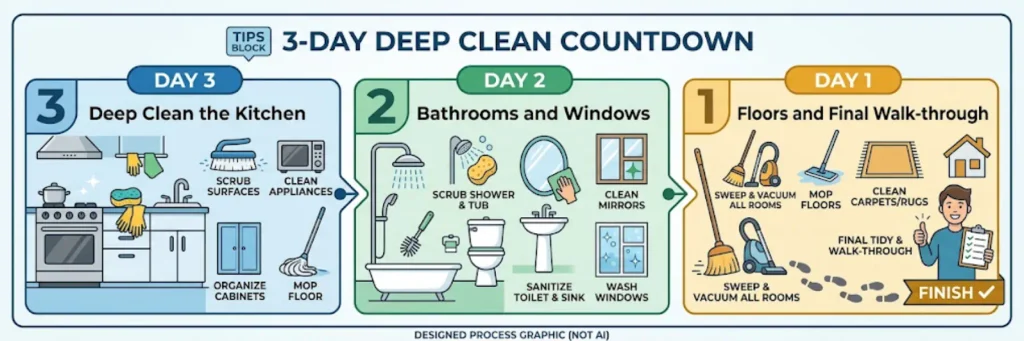
Day 3: Kitchen deep clean. Oven, rangehood, stovetop, cupboard interiors, fridge space, dishwasher, sink. This is the longest single room and needs the most soak time.
Day 2: Bathrooms and windows. All bathrooms (grout, shower screen, exhaust fan, toilet, vanity), then every window (glass, tracks, screens, sills).
Day 1: Floors, bedrooms, living areas and the final walk-through. Skirting boards, wardrobes, light fittings, cobwebs. Vacuum and mop all floors. Do a final walk-through with the condition report in hand and photograph every room.
Download the checklist, or let Pro Clean handle it with a bond-back guarantee
If you want to DIY, save this page or print it. It covers everything a Victorian property manager will check.
If you would rather hand it off, Pro Clean Melbourne offers a full end of lease cleaning Melbourne service built around the same inspection checklist agents use. Our team is trained, insured and police-checked, and we offer a bond-back cleaning guarantee.
Our earlier blog, do you really need professional cleaners to get your bond back, breaks down the DIY-versus-professional decision honestly.
Ready to book? Book a professional end of lease clean or get a free quote.
We service Melbourne’s western suburbs including Point Cook, Werribee, Tarneit, Truganina and Hoppers Crossing. For bond cleaning in Point Cook, visit our local page.
Frequently asked questions
What should an end of lease clean include?
A thorough end of lease clean covers the kitchen (oven, rangehood, stovetop, cupboards, sink), bathrooms (shower, grout, toilet, vanity, exhaust fan), bedrooms (wardrobes, skirting boards, light fittings), windows (glass, tracks, screens), and all floors. Carpet steam cleaning is often required separately under the lease. The clean should match or exceed the standard noted on your ingoing condition report.
Do I need to steam clean the carpets to get my bond back?
Check your lease. Many Victorian rental agreements require professional carpet steam cleaning at lease end, and agents will ask for the receipt. Even if the lease does not specifically require it, visibly stained or odorous carpet is a common reason for bond deductions. If in doubt, get the carpets professionally cleaned and keep the invoice.
What happens if the agent finds something on the final inspection?
The agent will note any items that do not meet the condition report standard. You may be given the opportunity to rectify the issue before a bond claim is lodged. If a dispute arises, Victoria’s Rental Dispute Resolution Victoria (RDRV) service, launched in 2025, offers a free pathway to resolve bond disagreements before they reach VCAT. Most bond disputes are settled by agreement rather than at tribunal.
Moving out of a Melbourne rental? Explore our end of lease cleaning Melbourne service or get a free quote today.